Don’t Let the Meaning Wash Away
September 2, 2026
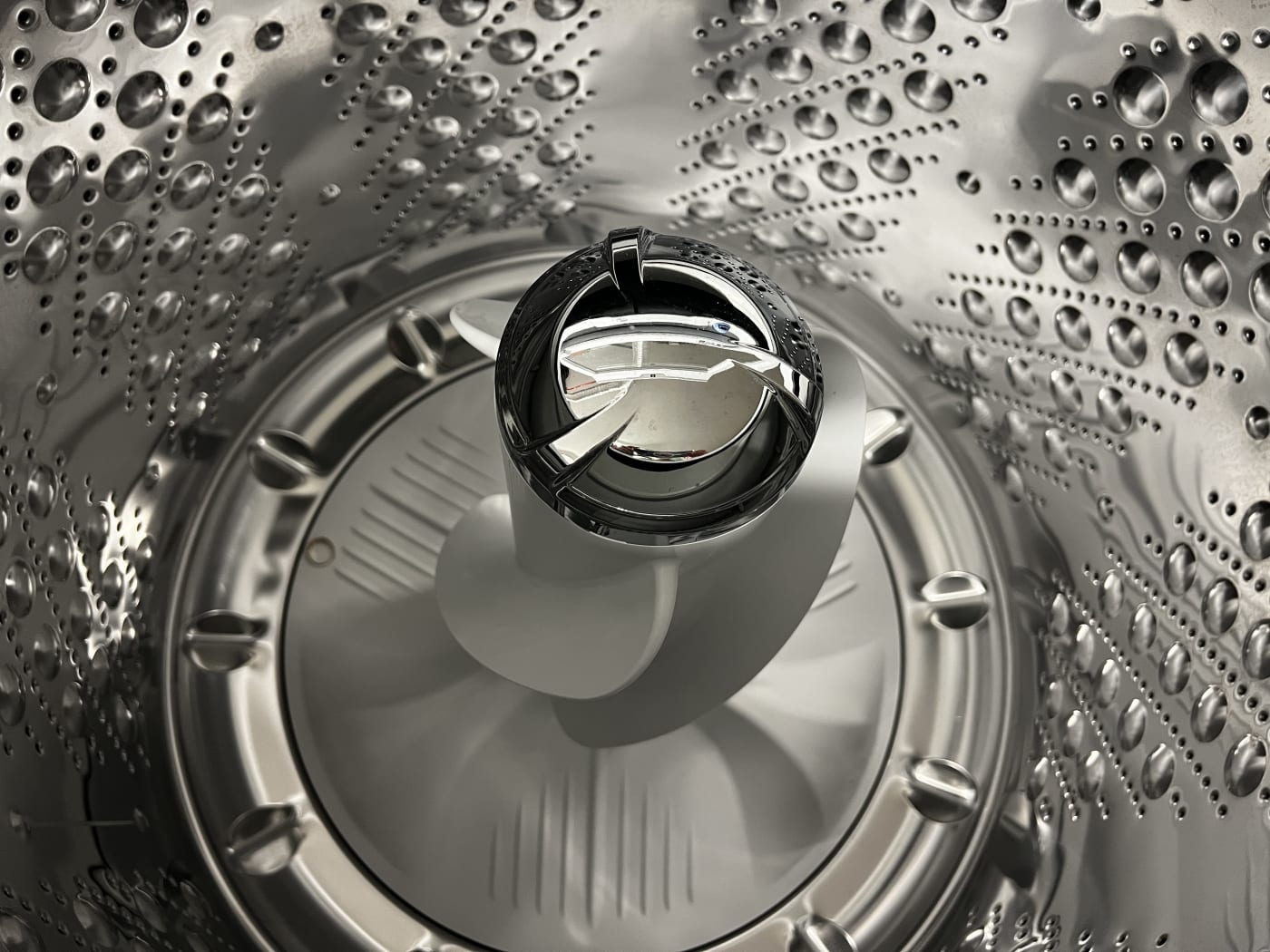
I found my great-grandmother’s engagement ring at the bottom of my washing machine.
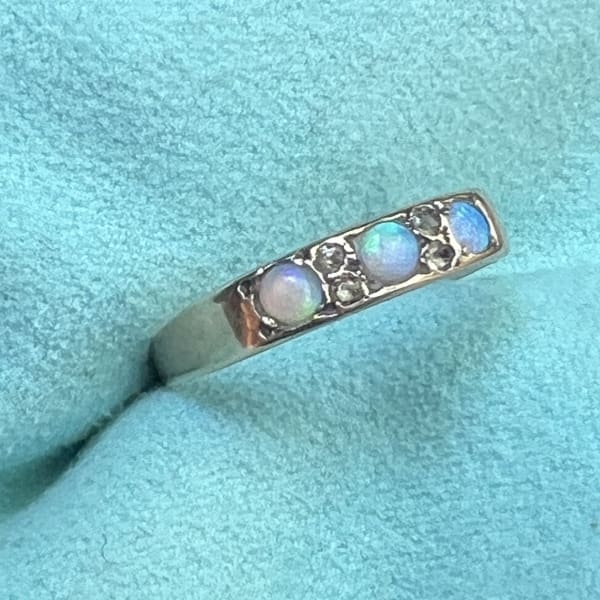
It’s not an expensive ring. It is a simple gold band with three small opals and four tiny diamond chips. It’s been passed from mother to daughter for four generations. I got it from my mom when I turned 16 and I planned on giving it to my daughter when she did. But on this particular Tuesday, it was sloshing around with the towels because at eight years old, my daughter thought it was just a toy.
I hadn’t worn it in years so it had been sitting in my jewelry box, doing what heirlooms mostly do: existing, unbothered, waiting. The relief I felt, finding that ring at the bottom of the washer, wasn’t just that I didn’t lose it but that I didn’t lose the opportunity to pass it down to her.
Objects That Refuse to Be “Just Stuff”
There’s a term anthropologists use for objects like this: inalienable. I’d only heard “inalienable” before in the Declaration of Independence as in inalienable rights. In that context, inalienable means what cannot be given away, sold, signed over, or transferred to someone else, even if you wanted to. It’s permanently attached to you. Non-negotiable. Non-transferable, by definition. So when anthropologists borrowed that word to describe heirlooms — objects that get handed down, gifted, willed, and passed hand to hand across generations — it sounds like a contradiction. My ring has been transferred three times. How is anything about it “non-transferable”?
The Paradox: Keeping While Giving
We got this nomenclature most notably from anthropologist Annette Weiner, who called it the “paradox of keeping-while-giving.” Archaeologist Roberta Gilchrist applied the idea straight to heirlooms: as inalienable objects, they epitomize that paradox. The object itself moves. The ring left my mother’s hand and landed in mine. Someday it’ll leave mine and land in my daughter’s. That part is completely alienable — it’s a physical object, and physical objects can obviously change hands.
What doesn’t transfer, according to this theory, is the essence the object carries. Kayla O’Daniel writes about this using her own family’s heirloom — a rocking chair too broken to actually sit in — in Plot(s), the design studies journal at Parsons School of Design. Even stripped of its function, the chair still does its real job: it still holds her great-great-grandmother’s presence, her habits, the specific porch she rocked on, the specific hill town she watched from it. That part of the chair was never up for transfer. It stays put, generation after generation, riding along inside an object that technically keeps switching owners.
That’s why “inalienable” fits, even though it looks like it shouldn’t. The ownership is alienable. The identity baked into the object is not. You can hand someone an item but the meaning has to be kept alive on purpose, or it quietly detaches and the object becomes just gold and stone again, or worse a toy.
What Almost Happened in My Laundry Room
Here’s what unsettled me about finding that ring in the wash: nothing was technically wrong. The ring wasn’t damaged. But for my daughter, it existed as a pure object — unlabeled, unexplained, indistinguishable from any other piece of jewelry. She handled it like a toy, because to her, that’s genuinely all it was. Not because she did anything wrong. Because nobody had ever told her otherwise.
That’s the failure this whole concept points to. An heirloom’s “inalienable” essence isn’t automatic and it isn’t permanent by magic — it’s permanent only as long as someone keeps re-attaching the story to the object, generation after generation. Skip that step even once, and the thing that was supposed to be un-transferable transfers anyway, by accident, into just stuff. A ring is a ring until somebody says otherwise, out loud, to the person who’s going to inherit it next.
I hadn’t done that yet. My daughter had no way of knowing which drawer held the family’s actual history and which drawer held things that were fine to play with. That’s not a parenting failure so much as an information gap — and it’s the exact gap this research keeps pointing back to.
The One Thing That Actually Makes an Object Inalienable
If anthropology is right, then the thing that makes an heirloom “inalienable” was never the object at all. It’s the story riding shotgun inside it. Gold doesn’t remember anything. Opals don’t know whose hand they’ve been on. The only thing capable of carrying that essence forward is a person, choosing to say it out loud before the object changes hands again.
So that’s what I did that week. I sat my daughter down, put the ring in her palm, and told her exactly whose hands it had been on before hers — starting with a great-great-grandmother she’ll never meet, ending with the fact that it’ll be hers one day.
It’s also, not entirely by coincidence, the exact problem I built KeepSeek to solve — a place to keep the object and its story attached to each other, so the story doesn’t depend on our remembering to say it out loud at the right moment.
I’ve made it as easy as possible. Pick an object in your house that’s quietly carrying more than it looks like it should. Take a photo of it and say its story out loud. Let KeepSeek keep them connected and pass it along to whoever’s going to inherit it — even if they’re too young to fully get it yet. Especially if they’re too young to fully get it yet. That’s the difference between an object that stays inalienable and one that just becomes, eventually, stuff at the bottom of a washing machine.