Why I Started KeepSeek
August 17, 2026
After my mom passed away, my sister and I sat on the floor of her house surrounded by decades of her belongings. We weren’t just overwhelmed by how much there was — we were dismayed by how little we actually knew about any of it.
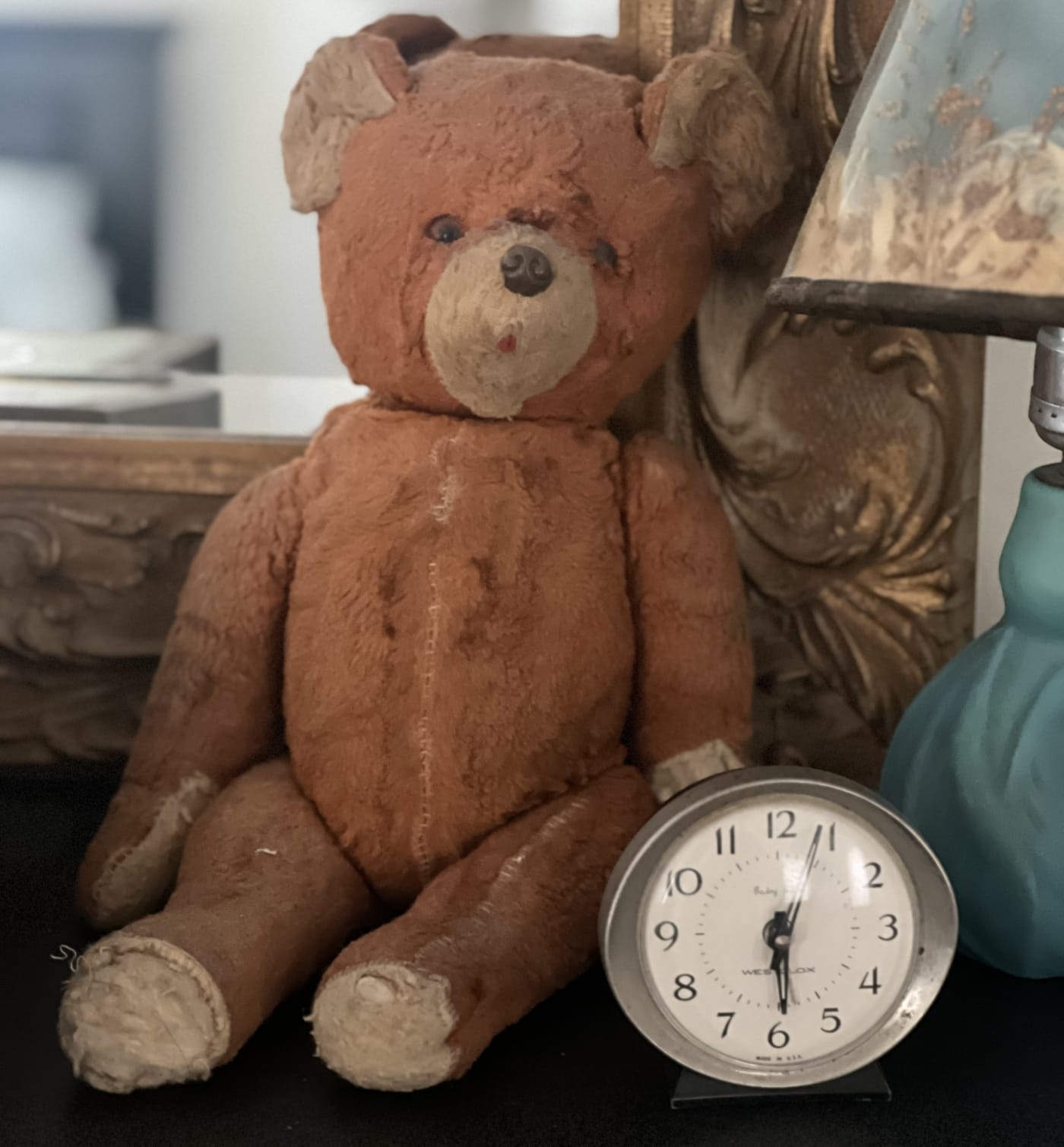
Take the teddy bear. She’d kept it for over sixty years. She loved it enough to move it from house to house, decade to decade. But I don’t know its name. I don’t know who gave it to her. I don’t know how it made her feel when she held it. Those are questions I’ll never get to ask now.
Underneath the grief of losing her was a second, quieter loss: all the stories that went with her.
The Clock That Isn’t a Clock
Here’s the thing about heirlooms — they’re rarely about the object itself.
The clock on my shelf doesn’t work anymore. Logically, I should toss it. But it’s not really an alarm clock to me. It’s the feeling of being grown-up enough that Mom let me take it to camp. It’s the nickname “Rooster,” which I earned the summer I knocked it clean across the room, alarm blaring, waking up the entire cabin. I know I should let it go. I don’t, because it’s an anchor to a version of me I don’t want to lose.
It turns out there’s real psychology behind that feeling. Researchers who study identity have long argued that our sense of self isn’t limited to our body and mind — it extends outward into the things we own, a concept known as the “extended self.” The philosopher William James wrote about this back in 1890, and consumer psychologist Russell Belk built on it in the 1980s: our belongings act as a kind of second skin, so much so that losing something we’ve invested meaning in can register almost like a physical loss.
That tracks with how it actually feels to hold my mom’s things. It’s not sentimentality for its own sake — it’s that the object and the memory have fused. Throwing away the clock doesn’t feel like tidying up. It feels like erasing something.
Why Not Knowing Is Its Own Kind of Grief
What made going through Mom’s house so hard wasn’t just missing her. It was running into object after object with no explanation attached, and realizing she was the only person who could have provided one.
There’s a particular discomfort in this — encountering a mystery you can never solve because the one person who held the answer is gone. It’s not just that we forget the stories over time. It’s that the person who owned an object was always the translator of what it meant, and once they’re gone, so is the key.
That’s also why an old coffee mug or a dog-eared paperback can tell a truer story than our memories do. Memory tends to edit itself down to the highlight reel — birthdays, holidays, the big moments. Objects hold onto the ordinary, unedited version of a person: the mug they reached for every morning, the book they underlined in the margins. That’s a version of someone that’s easy to lose, because it rarely occurs to anyone to write it down at all.
The Solution
I started KeepSeek to solve both of these problems at once.
I wanted a way to capture the stories behind the things we keep — not after it’s too late to ask, but while we still can. Somewhere my kids, and someday their kids, can find out that the teddy bear had a name, or why the clock earned a place of honor instead of a trip to the dump.
And selfishly, I wanted permission to let go of things without the guilt. If the story is saved, the object doesn’t have to carry the whole weight of the memory by itself. You can keep what matters and release the rest — which, it turns out, is its own kind of relief.
That’s KeepSeek. Not a place to store things. A place to make sure the things you keep still make sense to the people who come after you.
This blog is where I’ll keep working on that question. I’ll write about the objects families hold onto and why, what researchers have found about our attachment to things, and what I’m learning as I build KeepSeek.
If you want somewhere to start, pick the object you’d have the hardest time explaining to someone who didn’t know you.
— Michelle, KeepSeek founder